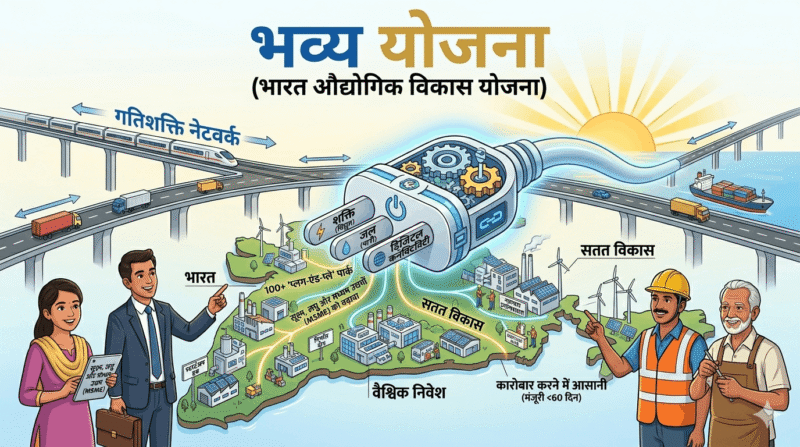
23 मई 2026 को Commerce Minister Piyush Goyal ने भारत की सबसे महत्वाकांक्षी industrial infrastructure scheme की operational guidelines जारी कीं — BHAVYA (Bharat Audyogik Vikas Yojana)।
BHAVYA एक centrally approved industrial infrastructure scheme है जिसका लक्ष्य है 100 world-class plug-and-play industrial parks develop करना — ready-to-use facilities के साथ, ताकि industries procedural delays के बिना जल्दी operations शुरू कर सकें।
₹33,660 करोड़ के outlay के साथ यह 6 साल (2026-27 से 2031-32) का mega program है जो Make in India, PM Gati Shakti और Viksit Bharat 2047 के साथ पूरी तरह aligned है।
Cabinet Approval: 18 मार्च 2026 को Union Cabinet ने BHAVYA को मंजूरी दी।
Guidelines Release: 23 मई 2026 को DPIIT ने detailed operational guidelines जारी कीं।
इस लेख में जानें — BHAVYA का full form, objectives, 4 key features, SPV model कैसे काम करेगा, financial assistance का structure, selection process, NICDC की भूमिका, आम नागरिकों और investors को क्या फायदा, और UPSC के लिए key points।
📊 BHAVYA Scheme 2026 — एक नज़र में
| विवरण | जानकारी |
|---|---|
| Scheme का नाम | BHAVYA |
| Full Form | Bharat Audyogik Vikas Yojana |
| वैकल्पिक Full Form | Build High-Value Advanced Yards for Acceleration |
| Type | Central Sector Scheme |
| Cabinet Approval | 18 मार्च 2026 |
| Guidelines Release | 23 मई 2026 |
| Guidelines जारी किए | Commerce Minister Piyush Goyal |
| Nodal Ministry | DPIIT, Ministry of Commerce & Industry |
| Implementing Agency | NICDC (National Industrial Corridor Dev Corp) |
| कुल Outlay | ₹33,660 करोड़ |
| Industrial Parks | 100 (6 साल में) |
| Phase 1 | 50 Parks (challenge-based) |
| Period | FY 2026-27 to FY 2031-32 |
| Park Size | 100-1,000 acres |
| Financial Assistance | ₹1 करोड़/acre तक |
| Min Land (Non-Hilly) | 100 acres |
| Min Land (Hilly/NE/UT) | 25 acres |
| Park Types | Greenfield + Brownfield |
| Implementation | SPVs (Companies Act 2013) |
| Monitoring | GIS-based |
| PIB Source | PRID 2264533, 23 मई 2026 |
| अंतिम अद्यतन | मई 2026 |
🎯 BHAVYA क्या है?
BHAVYA Scheme को DPIIT ने इस उद्देश्य से design किया है कि 100 plug-and-play industrial parks बनाएं — pre-approved land, ready utilities और integrated services के साथ — ताकि industries ease of doing business के साथ quickly establish हो सकें।
“Plug-and-Play” का मतलब क्या है?
Traditional Industrial Parks में कंपनियों को:
- ❌ Land clearances के लिए वर्षों इंतज़ार
- ❌ Utilities (water, electricity, gas) खुद arrange करना
- ❌ Multiple government approvals अलग-अलग लेना
- ❌ Road connectivity के लिए depend रहना
BHAVYA में सब पहले से तैयार:
- ✅ Pre-approved land — कोई clearance delay नहीं
- ✅ Ready utilities — electricity, water, waste management
- ✅ Single-window system — सभी approvals एक जगह
- ✅ Multimodal connectivity — road, rail, port से linked
- ✅ Worker housing — factory के पास ही
- ✅ Testing labs — quality check on-site
योजना के 5 मुख्य उद्देश्य
BHAVYA Scheme के 5 मुख्य objectives हैं: manufacturing-led economic growth accelerate करना, pre-approved infrastructure से ease of doing business enhance करना, cluster-based industrial development promote और domestic supply chains strengthen करना, large-scale employment generate और investments attract करना।
💰 Financial Structure — ₹33,660 करोड़ कैसे Use होगा?
Overall Outlay
Scheme में 100 industrial parks का development 2026-27 से 2031-32 तक होगा — approximately ₹33,660 करोड़ के total financial outlay के साथ।
Per Acre Assistance
Industrial parks को ₹1 करोड़ प्रति acre तक की financial support मिलेगी।
Example:
- 200 acre park → ₹200 करोड़ तक support
- 500 acre park → ₹500 करोड़ तक support
- 1,000 acre park → ₹1,000 करोड़ तक support
Financial Assistance का Structure
Scheme equity contribution के रूप में financial assistance देगी — जो SPV को transfer की गई land की value और prescribed project milestones की achievement से linked होगी।
Milestone-based disbursement का मतलब:
- पैसा एक बार में नहीं मिलेगा
- हर milestone पूरा होने पर release होगा
- Land transfer → Infrastructure development → Operationalization → each stage पर payment
🏗️ SPV Model — Implementation कैसे होगी?
BHAVYA के तहत projects की implementation Special Purpose Vehicles (SPVs) के माध्यम से होगी — Companies Act 2013 के तहत incorporated। SPVs project planning, development, operation, management, investor facilitation और Scheme के तहत create assets की long-term maintenance के लिए ज़िम्मेदार होंगी।
SPV में कौन शामिल होगा?
Public-Private Partnership model:
| Partner | Role |
|---|---|
| State Government | Land provide करेगी, local approvals |
| Central Government (DPIIT) | Financial assistance, policy support |
| Private Developers | Investment, construction, management |
| NICDC | Technical support, monitoring |
Private developers की structured participation के लिए project-specific SPVs का provision है — clearly defined governance frameworks, transparency safeguards और accountability mechanisms के साथ।
🏢 NICDC — Implementation का नेतृत्व
NICDC (National Industrial Corridor Development Corporation) BHAVYA scheme की implementation anchor करेगा। NICDC currently 13 states में 20 industrial corridor projects implement कर रहा है — Dholera, Shendra-Bidkin, Vikram Udyogpuri और Greater Noida जैसे industrial nodes सहित — जो integrated planning और investor-ready industrial ecosystems में progress दिखा चुके हैं।
NICDC Ministry of Textiles के तहत 7 PM MITRA Parks के लिए भी Project Management Agency के रूप में काम कर रहा है — जो textile sector में integrated manufacturing ecosystems support करते हैं।
NICDC की BHAVYA में भूमिका
- ✅ PMA (Project Management Agency) — overall coordination
- ✅ Technical support — SPVs को guidance
- ✅ Monitoring — GIS-based tracking
- ✅ Investor facilitation — companies को attract करना
- ✅ Quality assurance — infrastructure standards maintain
🔍 Challenge-Based Selection Process
BHAVYA Phase 1 में 50 parks challenge-based competitive process से select होंगे।
Selection Criteria
Proposals का evaluation objective parameters पर होगा जिसमें multimodal connectivity, site suitability, quality of infrastructure, industrial ecosystem strength, policy facilitation, digital governance readiness, और long-term sustainability शामिल हैं।
Infrastructure quality evaluation में underground utility systems, water और waste management infrastructure, common effluent treatment systems, renewable energy infrastructure, worker housing, testing laboratories, digital single-window systems, skill development facilities और integrated common infrastructure शामिल हैं।
कौन Apply कर सकता है?
- State Governments
- State Industrial Development Corporations
- Urban Local Bodies
- Private developers (SPV के through)
- Public Sector Undertakings
🌍 PM Gati Shakti से Connection
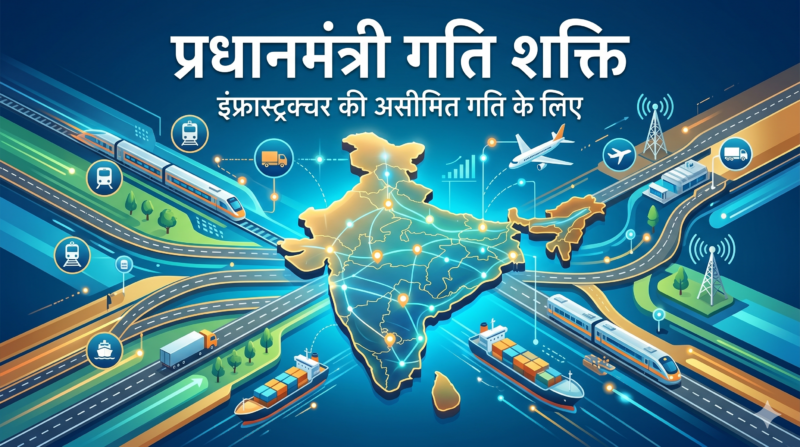
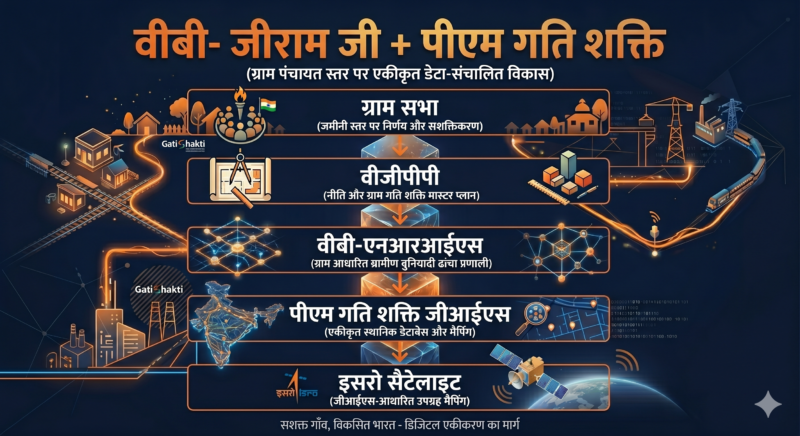
BHAVYA के proposed industrial parks PM GatiShakti National Master Plan के साथ aligned होंगे — multimodal connectivity और efficient last-mile access पर focus के साथ।
PM Gati Shakti → BHAVYA की chain:
PM Gati Shakti (National Infrastructure Planning)
              ↓
    GIS Platform पर Park locations mapped
              ↓
    Multimodal connectivity — Road + Rail + Port
              ↓
    BHAVYA Industrial Parks — Plug-and-Play
              ↓
    Manufacturing Investment → Exports → Jobs
BHAVYA Scheme को Make in India और PM Gati Shakti जैसी flagship national initiatives के साथ alignment में conceptualize किया गया है — India को global manufacturing और export hub बनाने की broader vision के साथ।
🌱 BHAVYA में Sustainability Features
Parks में plug-and-play infrastructure होगा जिसमें multimodal logistics connectivity, reliable utility systems, worker-support infrastructure, digital governance systems और sustainable development features शामिल हैं।
Green और Sustainable elements:
- ✅ Renewable energy infrastructure — solar और clean energy
- ✅ Common Effluent Treatment Plants (CETP) — pollution control
- ✅ Water और waste management — zero liquid discharge
- ✅ Green building standards — energy efficient construction
- ✅ EV charging infrastructure — future-ready
📍 Land Requirements — Park कहाँ बनेगा?
| Location Type | Minimum Land |
|---|---|
| Non-hilly states (सामान्य) | 100 acres |
| Hilly states | 25 acres |
| पूर्वोत्तर (NE) states | 25 acres |
| Union Territories | 25 acres |
| Smaller states | 25 acres |
| Maximum size | 1,000 acres |
Greenfield और Brownfield दोनों eligible:
- Greenfield: नई जगह पर नया park — fresh development
- Brownfield: पुराने industrial land को revamp करना
🔭 Monitoring और Transparency
Effective implementation और transparency सुनिश्चित करने के लिए Guidelines में GIS-based monitoring systems, periodic progress reporting, audit mechanisms और National Level Steering Committee की oversight शामिल है — जिसकी अध्यक्षता Secretary, DPIIT करेंगे।
Governance Architecture
- National Level Steering Committee: Secretary, DPIIT की अध्यक्षता — highest oversight
- NICDC (PMA): Day-to-day implementation और monitoring
- GIS-based tracking: Real-time progress visibility
- SPV Board: Project-level governance
- Audit mechanism: Regular financial और performance audit
👨💼 आम नागरिकों को BHAVYA से क्या फायदा?
BHAVYA एक industrial scheme है — लेकिन इसका असर हर भारतीय पर पड़ेगा।
1. रोज़गार सृजन
100 industrial parks → लाखों factories → करोड़ों direct और indirect jobs।
NICDC के existing projects का example: Dholera Industrial City में अकेले 8 लाख+ jobs की उम्मीद है।
2. Local economy boost
Industrial park के आस-पास:
- Hotels, restaurants, shops का विकास
- Transportation और logistics jobs
- Supplier और vendor ecosystem
- Housing demand → real estate growth
3. सस्ते products
India में manufacturing बढ़ेगी → Import कम → Domestic products सस्ते।
4. Skill development opportunities
हर park में skill development facilities — local youth को training।
5. Export से foreign exchange
More exports → Strong rupee → Economy मज़बूत।
📊 BHAVYA vs पुराने Industrial Park Programs
| पहलू | पुरानी Policy | BHAVYA |
|---|---|---|
| Land clearance | वर्षों | Pre-approved |
| Utilities | Company arrange करे | Ready-to-use |
| Approvals | Multiple windows | Single window |
| Connectivity | Ad-hoc | PM Gati Shakti aligned |
| Financial support | Limited | ₹1 Cr/acre |
| Monitoring | Manual | GIS-based real-time |
| Private participation | Limited | Structured PPP via SPV |
| Sustainability | Not mandated | Mandatory green features |
| Scale | Small | 100 parks, ₹33,660 Cr |
🌐 BHAVYA के साथ Convergence
Scheme guidelines में Central और State Government initiatives के साथ convergence का provision है — logistics, skilling, sustainability, renewable energy, utility infrastructure और industrial development के लिए।
Convergence schemes:
- PM Gati Shakti — Infrastructure planning
- PMKVY 4.0 — Skilled workforce
- National Logistics Policy — Logistics cost reduction
- PM-VBRY — First-time employee incentives
- National Industrial Corridor Programme — Existing corridors
- PM MITRA Parks — Textile integration
🎓 UPSC और Competitive Exams के लिए Key Points
BHAVYA UPSC के लिए highly relevant है:
Prelims: GS-3 (Economy), Current Affairs March/May 2026
Mains GS-3 Topics:
- Industrial policy और infrastructure development
- Make in India → BHAVYA connection
- PPP model in infrastructure
- PM Gati Shakti integration
- Ease of doing business
Key Facts for Exam:
- Full form: Bharat Audyogik Vikas Yojana
- Cabinet approval: 18 March 2026
- Guidelines: 23 May 2026 (Piyush Goyal)
- Outlay: ₹33,660 crore
- Parks: 100 (6 years, Phase 1: 50)
- Per acre: ₹1 crore
- PMA: NICDC
- Ministry: DPIIT, Commerce & Industry
- Implementation: SPV model
- Period: 2026-27 to 2031-32
- Connection: Make in India + PM Gati Shakti
- Monitoring: GIS-based
📞 आधिकारिक स्रोत
- PIB Release: pib.gov.in — PRID 2264533
- DPIIT: dpiit.gov.in
- NICDC: nicdc.in
- Ministry of Commerce: commerce.gov.in
- PM Gati Shakti: pmgatishakti.gov.in
- Make in India: makeinindia.com
🔗 संबंधित लेख
- प्रधानमंत्री गति शक्ति योजना — National Master Plan
- PM Vishwakarma Yojana — कारीगरों को ₹3 लाख loan
- PMKVY 4.0 — Skilled workforce
- PM-VBRY — First job ₹15,000 incentive
- PM Internship Scheme — Top 500 companies internship
अक्सर पूछे जाने वाले प्रश्न (FAQ)
BHAVYA Scheme क्या है?
BHAVYA (Bharat Audyogik Vikas Yojana) भारत सरकार की एक Central Sector Scheme है जिसे Cabinet ने 18 मार्च 2026 को approve किया। इसका लक्ष्य है ₹33,660 करोड़ के outlay से 6 साल (2026-27 से 2031-32) में 100 world-class plug-and-play industrial parks develop करना। DPIIT इसका nodal ministry है और NICDC implementing agency है।
BHAVYA का Full Form क्या है?
BHAVYA का full form है “Bharat Audyogik Vikas Yojana”। एक वैकल्पिक full form “Build High-Value Advanced Yards for Acceleration” भी cite किया जाता है। Commerce Minister Piyush Goyal ने 23 मई 2026 को इसकी operational guidelines जारी कीं।
BHAVYA में “Plug-and-Play” Industrial Park क्या होता है?
Plug-and-Play park में companies को आते ही ready infrastructure मिलती है — pre-approved land, ready utilities (electricity, water, gas), single-window approvals, multimodal connectivity (road/rail/port), worker housing, testing labs और digital governance systems। पारंपरिक industrial setup में जहाँ years लगते हैं, वहाँ plug-and-play में companies तुरंत operations शुरू कर सकती हैं।
BHAVYA में financial assistance कितनी मिलती है?
BHAVYA में ₹1 करोड़ प्रति acre तक financial assistance मिलती है — SPV को transferred land की value और project milestones से linked equity contribution के रूप में। 100 acre park को ₹100 करोड़ और 1,000 acre park को ₹1,000 करोड़ तक मिल सकता है। Phase 1 में 50 parks challenge-based selection से चुने जाएंगे।
NICDC क्या है और BHAVYA में इसकी भूमिका क्या है?
NICDC (National Industrial Corridor Development Corporation) DPIIT के under एक PSU है। BHAVYA में NICDC Project Management Agency (PMA) है — implementation support, monitoring और coordination के लिए ज़िम्मेदार। NICDC currently 13 states में 20 industrial corridor projects implement कर रहा है और 7 PM MITRA Parks की भी PMA है। Dholera और Shendra-Bidkin जैसे industrial cities NICDC के उल्लेखनीय examples हैं।
BHAVYA का PM Gati Shakti से क्या संबंध है?
BHAVYA को PM Gati Shakti National Master Plan के साथ aligned किया गया है — multimodal connectivity और efficient last-mile access ensure करने के लिए। BHAVYA parks की GIS mapping PM Gati Shakti platform पर होगी। यह ensure करेगा कि हर industrial park road, rail और port से properly connected हो — logistics cost कम हो और Make in India का objective पूरा हो।
BHAVYA में SPV Model कैसे काम करता है?
BHAVYA के तहत हर industrial park के लिए एक Special Purpose Vehicle (SPV) Companies Act 2013 के तहत incorporate होगी। SPV में State Government, Central Government, Private Developers और NICDC participate करेंगे। SPV project planning, development, operation, management, investor facilitation और long-term asset maintenance के लिए ज़िम्मेदार होगी। Private developers की structured participation के लिए governance frameworks और accountability mechanisms तय किए गए हैं।
BHAVYA Scheme से रोज़गार कितना मिलेगा?
BHAVYA का direct objective है large-scale employment generate करना। 100 industrial parks में manufacturing investment attract करने से direct और indirect — दोनों तरह के करोड़ों jobs create होंगे। NICDC के existing industrial projects का example लें तो Dholera Industrial City में अकेले 8 लाख+ jobs expected हैं। 100 parks nationwide से कई गुना ज़्यादा employment generation संभव है।
BHAVYA में कौन Apply कर सकता है?
State Governments, State Industrial Development Corporations, Urban Local Bodies, Private Developers (SPV के through) और Public Sector Undertakings BHAVYA के तहत industrial park proposals submit कर सकते हैं। Challenge-based competitive selection में proposals का evaluation multimodal connectivity, site suitability, infrastructure quality, policy facilitation और long-term sustainability पर होगा।
BHAVYA Phase 1 में कितने parks होंगे?
BHAVYA के Phase 1 में 50 industrial parks को challenge-based competitive selection process से select किया जाएगा। बाकी 50 parks Phase 2 में। कुल 100 parks FY 2026-27 से FY 2031-32 के बीच — 6 साल में — develop होंगे। पहले phase में selection के लिए State Governments और private entities से proposals मांगे जाएंगे।
यह लेख DPIIT की BHAVYA Scheme की PIB press release (PRID 2264533, 23 मई 2026) और Cabinet approval (18 मार्च 2026) पर आधारित है। Scheme details और guidelines update हो सकती हैं। नवीनतम जानकारी के लिए dpiit.gov.in या pib.gov.in देखें।
स्रोत: PIB India PRID 2264533 | DPIIT | NICDC | Business Standard | The Tribune | 23 मई 2026

लेखक: सरिता मिश्रा — सरिता “सरकारी योजना” की मुख्य लेखिका हैं। वे केंद्र और राज्य सरकार की योजनाओं पर शोध करके उन्हें आसान हिंदी में समझाती हैं, ताकि हर आम परिवार ज़रूरी जानकारी आसानी से समझ सके। हर लेख आधिकारिक स्रोतों (PIB, मंत्रालय की वेबसाइट और सरकारी पोर्टल) से जाँचने के बाद ही प्रकाशित किया जाता है।