22 मई 2026 को ग्रामीण विकास मंत्रालय ने एक ऐतिहासिक आधिकारिक पत्र (No. J-11060/12/2026-RE-III) जारी किया — जो VB-G RAM G Act 2025 के तहत Gram Panchayats की A, B, C Categorisation के लिए indicative framework और parameters निर्धारित करता है।
यह पत्र सभी States/UTs के Secretary/Additional Secretary/Commissioner, Rural Development Department को भेजा गया है और Assistant Commissioner Deeksha Supyaal Bisht द्वारा Competent Authority की मंजूरी से जारी किया गया है।
यह वह framework है जो तय करेगा कि आपकी Gram Panchayat Category A है, B है या C — और इसी से तय होगा कि आपके गांव को VB-G RAM G के तहत कितना काम और बजट मिलेगा।
📊 आधिकारिक पत्र — एक नज़र में
| विवरण | जानकारी |
|---|---|
| Letter No. | J-11060/12/2026-RE-III (396352) |
| Date | 22 मई 2026 |
| Ministry | ग्रामीण विकास मंत्रालय |
| Department | Department of Rural Development |
| Division | Rural Employment Division |
| Address | Kartavya Bhawan-3, New Delhi-110001 |
| Signed by | Deeksha Supyaal Bisht, Assistant Commissioner |
| To | All States/UTs (except JT of Delhi & Chandigarh) |
| Subject | A,B,C Categorisation of GPs under VB-G RAM G Act, 2025 |
| Legal Basis | Section 4(4), Para 5(3) और Para 7 of Schedule I |
| Annexure | Annexure-A — Parameters and Methodology |
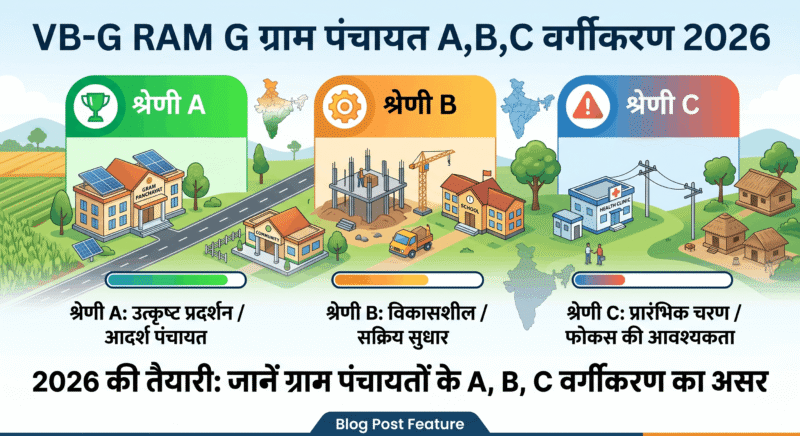
| Category A | PAI Score 66% से ऊपर |
| Category B | PAI Score 33% से 66% |
| Category C | PAI Score 33% से नीचे |
🎯 A,B,C Categorisation क्यों ज़रूरी है?
VB-G RAM G Act 2025 के Section 4(4), Para 5(3) और Para 7 of Schedule I में Gram Panchayats की A,B,C Categorisation को legally mandatory बनाया गया है।
यह categorisation इसलिए ज़रूरी है:
- ✅ बेहतर planning — developed और underdeveloped GPs के लिए अलग approach
- ✅ Targeted resource allocation — Category C को ज़्यादा support
- ✅ Evidence-based governance — PAI 2.0 data पर based, subjective नहीं
- ✅ State-specific flexibility — States अपनी local conditions के अनुसार adapt कर सकते हैं
Para 3 का सबसे महत्वपूर्ण प्रावधान:
“Irrespective of the categorisation of Gram Panchayats, demand for work arising at the grassroots level shall continue to be honoured and employment shall be provided within the stipulated time frame.”
मतलब: Category A हो, B हो या C — हर rural household का 125 दिन रोज़गार का अधिकार unchanged रहेगा। Categorisation सिर्फ resource planning के लिए है, rights कम नहीं होंगे।
📐 A,B,C Categorisation Formula — Annexure-A
तीन Categories और Score Range
| Category | Composite Score | Development Level |
|---|---|---|
| Category A | 66% से ऊपर | Well-developed GP |
| Category B | 33% से 66% | Moderate development |
| Category C | 33% से नीचे | Under-developed GP — Max support |
Complete Parameters Table (Official Annexure-A)
| Sr. | Parameter | Weightage |
|---|---|---|
| 1 | District Level Indicators | 10% |
| 1a | Aspirational Districts (NITI Aayog) | 5% |
| 1b | Districts under PM Dhan Dhanya Yojana | 5% |
| 2 | Gram Panchayat Level Indicators | 20% |
| 2a | Average days of employment provided per Household | 10% |
| 2b | Distance of GP from district head quarter | 10% |
| 3 | Panchayat Advancement Index 2.0 | 70% |
| 3 | Gram Panchayat PAI Score (2023-24) | — |
| कुल | 100% |
Parameters का विश्लेषण
Parameter 1: District Level Indicators (10%)
1a. Aspirational Districts — NITI Aayog (5%) NITI Aayog की Aspirational Districts Programme के तहत जो जिले listed हैं, वहाँ की GPs को extra weightage। ये वो जिले हैं जहाँ विकास के indicators कमज़ोर हैं — health, education, agriculture।
1b. PM Dhan Dhanya Yojana Districts (5%) जो districts PM Dhan Dhanya Yojana के तहत listed हैं — उन्हें भी special consideration। यह agricultural productivity और food security से linked scheme है।
इन दोनों में होने पर: GP को district level पर maximum 10% score मिलेगा।
Parameter 2: Gram Panchayat Level Indicators (20%)
2a. Average days of employment provided per Household (10%) पिछले साल GP में औसतन कितने दिन रोज़गार provide हुआ — यह indicator बताता है कि GP का MGNREGA/VB-G RAM G implementation कितना strong रहा है।
ज़्यादा employment days = Higher score
2b. Distance from district headquarter (10%) GP जितनी दूर district HQ से है — उतनी ज़्यादा remoteness। दूर GP को ज़्यादा support चाहिए।
ज़्यादा दूरी = Category C की तरफ (support बढ़ेगा)
Parameter 3: Panchayat Advancement Index 2.0 — PAI (70%)
सबसे important parameter — 70% weightage।
PAI 2.0 Ministry of Panchayati Raj द्वारा develop किया गया Gram Panchayat performance score है — जो 9 थीम के आधार पर हर GP को score करता है:
- Poverty free and enhanced livelihood
- Healthy village
- Child friendly village
- Water sufficient village
- Clean and green village
- Self-sufficient infrastructure
- Socially just and socially secure village
- Village with good governance
- Women friendly village
2023-24 का PAI Score use होगा।
Methodology — कैसे Calculate होगा?
Official Annexure-A methodology:
Step 1: Normalisation
- Binary sub-indicators (District level) के लिए normalisation ज़रूरी नहीं
- बाकी indicators को normalize करें
- Min-Max normalisation use करें — State के values के लिए
Step 2: Weighted Score Calculate करें
Composite Score = (PAI Score × 70%) +
                  (District Indicators × 10%) +
                  (GP Level Indicators × 20%)
Step 3: Equal weights within groups हर group (PAI 70%, District 10%, GP 20%) के अंदर sub-indicators को equal weight।
Step 4: Arithmetic Mean सभी normalized indicators का arithmetic mean लें।
Step 5: Final Classification
- Composite Score < 33% → Category C
- Composite Score 33% to 66% → Category B
- Composite Score > 66% → Category A
Gram Panchayat A, B, C Categorisation Calculator
अपनी पंचायत का Score डालें — Category और पूरा Breakdown तुरंत देखें
ग्रामीण विकास मंत्रालय के 22 मई 2026 के आधिकारिक पत्र (No. J-11060/12/2026-RE-III) के अनुसार, हर Gram Panchayat का Composite Score तीन हिस्सों से मिलकर बनता है:
- PAI 2.0 Score (70%) — Panchayat Advancement Index, egramswaraj.gov.in पर उपलब्ध
- District Level Indicators (10%) — Aspirational District और PM Dhan Dhanya Yojana coverage
- GP Level Indicators (20%) — Infrastructure और Livelihood-related local factors
इसी Composite Score से Category तय होती है: A (66% से ऊपर), B (33%–66%), C (33% से नीचे)। ध्यान दें — Category चाहे जो भी हो, हर पंचायत में 125 दिन रोज़गार की guarantee और बेरोज़गारी भत्ता जैसे अधिकार समान रहेंगे; categorisation सिर्फ resource planning के लिए है।
1. PAI 2.0 Score
70% weightअपनी पंचायत का PAI 2.0 Score (2023-24) egramswaraj.gov.in से देखें — यह 0 से 100 के बीच होगा।
2. District Level Indicators
10% weightक्या आपका ज़िला इन योजनाओं के अंतर्गत आता है?
3. GP Level Indicators
20% weightअपनी पंचायत की स्थिति के अनुसार अनुमानित स्कोर तय करें (0 = बहुत कमज़ोर, 100 = बहुत मज़बूत)।
| PAI 2.0 Score | ||
| District Level Indicators | ||
| GP Level Indicators | ||
| कुल Composite Score |
यह Calculator अनुमानित (indicative) है — आधिकारिक Category आपके राज्य के Rural Development Department द्वारा घोषित होगी। स्रोत: ग्रामीण विकास मंत्रालय पत्र संख्या J-11060/12/2026-RE-III, 22 मई 2026।
🏘️ आपकी Gram Panchayat किस Category में होगी?
Category A GP की पहचान
- ✅ NITI Aayog Aspirational District नहीं
- ✅ जिला मुख्यालय के पास (low remoteness)
- ✅ पिछले साल ज़्यादा employment days
- ✅ PAI 2.0 Score 2023-24 में high
- ✅ Composite Score 66% से ऊपर
Category A का मतलब: GP पहले से well-developed है। VB-G RAM G में standard allocation मिलेगा।
Category B GP की पहचान
- ✅/❌ Mix of good and poor indicators
- ✅ Composite Score 33% से 66% के बीच
- ✅ Average development level
Category B का मतलब: Moderate support — targeted improvement।
Category C GP की पहचान
- ✅ NITI Aayog Aspirational District में हो
- ✅ District HQ से बहुत दूर (remote)
- ✅ पिछले साल कम employment days
- ✅ PAI 2.0 Score 2023-24 में low
- ✅ Composite Score 33% से नीचे
Category C का मतलब: GP को maximum support और priority — VB-G RAM G में ज़्यादा resource allocation।
📋 States के लिए क्या करना है?
Official letter के अनुसार States/UTs को:
- Framework adopt करें — State-specific requirements के अनुसार adapt कर सकते हैं
- Authentic data use करें — Government databases और official datasets
- PAI 2.0 Score (2023-24) data use करें
- Categorisation complete करें — 1 July 2026 से पहले
- Necessary action लें — पत्र में explicitly कहा गया है
🌟 मज़दूरों के लिए सबसे ज़रूरी बात
Category A हो, B हो या C — आपके rights वही रहेंगे।
Letter का Para 3 explicitly confirm करता है:
“Demand for work arising at the grassroots level shall continue to be honoured and employment shall be provided within the stipulated time frame.”
यानी:
- ✅ 125 दिन रोज़गार की guarantee — हर GP में, हर category में
- ✅ बेरोज़गारी भत्ता — 15 दिन में काम नहीं मिला तो
- ✅ Mजदूरी payment — 15 दिन में अनिवार्य
Categorisation से सिर्फ planning और resource distribution बेहतर होगा — आपके fundamental rights कम नहीं होंगे।
🔗 Panchayat Advancement Index (PAI) 2.0 कहाँ देखें?
PAI 2.0 Score Ministry of Panchayati Raj की website पर देखा जा सकता है:
- Portal: egramswaraj.gov.in
- अपनी GP का नाम search करें
- PAI 2.0 Score 2023-24 देखें
- यही score आपकी GP की categorisation में 70% weight रखेगा
📞 आधिकारिक स्रोत
- ग्रामीण विकास मंत्रालय: rural.gov.in
- Ministry of Panchayati Raj (PAI): panchayat.gov.in
- eGram Swaraj: egramswaraj.gov.in
- VB-G RAM G Helpline: 1800-180-1551
- NITI Aayog Aspirational Districts: niti.gov.in
🔗 संबंधित लेख
- VB-G RAM G अधिनियम 1 जुलाई 2026
- VB-G RAM G Draft Rules 2026
- VB-G RAM G 318 कार्य Schedule I
- VB-G RAM G vs MGNREGA
- युक्तधारा पोर्टल
अक्सर पूछे जाने वाले प्रश्न (FAQ)
VB-G RAM G में Gram Panchayats की A,B,C Categorisation क्या है?
VB-G RAM G Act 2025 के Section 4(4) और Schedule I के Para 5(3) और Para 7 के तहत हर Gram Panchayat को A, B या C category में classify किया जाएगा। यह classification PAI 2.0 Score (70%), District Level Indicators (10%) और GP Level Indicators (20%) के composite score पर based है। 22 मई 2026 को ग्रामीण विकास मंत्रालय ने इसका official framework जारी किया।
A,B,C Categories का क्या मतलब है?
Category A: Composite Score 66% से ऊपर — well-developed GP। Category B: Score 33% से 66% — moderate development। Category C: Score 33% से नीचे — under-developed GP जिसे maximum support और resource priority मिलेगी। यह classification VB-G RAM G के तहत resource allocation और planning के लिए है।
क्या Category C की GP में मज़दूरों को कम रोज़गार मिलेगा?
नहीं। Official letter का Para 3 स्पष्ट करता है — “irrespective of the categorisation, demand for work shall continue to be honoured.” Category A, B या C — हर GP में हर eligible household को 125 दिन रोज़गार की guarantee VB-G RAM G Act के provisions के अनुसार पूरी होगी।
PAI 2.0 Score क्या है और यह कहाँ देखें?
Panchayat Advancement Index 2.0 (PAI) Ministry of Panchayati Raj का GP performance measurement tool है जो 9 थीम पर हर GP को score करता है। A,B,C Categorisation में इसका 70% weightage है। 2023-24 का PAI Score egramswaraj.gov.in पर देखा जा सकता है।
A,B,C Categorisation के लिए कौन से 3 main parameters हैं?
Official Annexure-A के अनुसार 3 main parameters हैं: (1) District Level Indicators (10%) — Aspirational Districts 5% + PM Dhan Dhanya Yojana Districts 5% (2) Gram Panchayat Level Indicators (20%) — Average employment days 10% + Distance from HQ 10% (3) PAI 2.0 Score (70%) — सबसे important, 2023-24 का score।
States को यह categorisation कब तक करनी है?
Official letter (22 मई 2026) में States/UTs को “information and necessary action” के लिए framework forward किया गया है। VB-G RAM G 1 जुलाई 2026 से launch होनी है — इससे पहले States को categorisation complete करनी होगी। States अपनी State-specific requirements के अनुसार framework adapt कर सकते हैं।
Category C की GP को क्या extra मिलेगा?
Category C — below 33% composite score — वाली GPs को VB-G RAM G में maximum support और resource priority मिलेगी। इसमें शामिल होंगे: ज़्यादा work allocation, targeted schemes, convergence में priority। लेकिन सभी GPs में 125 दिन employment guarantee unchanged रहेगी।
आधिकारिक स्रोत
यह लेख Ministry of Rural Development, Government of India के Official Letter No. J-11060/12/2026-RE-III (396352), Dated: 22 May 2026 और उसके Annexure-A पर आधारित है।

लेखक: सरिता मिश्रा — सरिता “सरकारी योजना” की मुख्य लेखिका हैं। वे केंद्र और राज्य सरकार की योजनाओं पर शोध करके उन्हें आसान हिंदी में समझाती हैं, ताकि हर आम परिवार ज़रूरी जानकारी आसानी से समझ सके। हर लेख आधिकारिक स्रोतों (PIB, मंत्रालय की वेबसाइट और सरकारी पोर्टल) से जाँचने के बाद ही प्रकाशित किया जाता है।