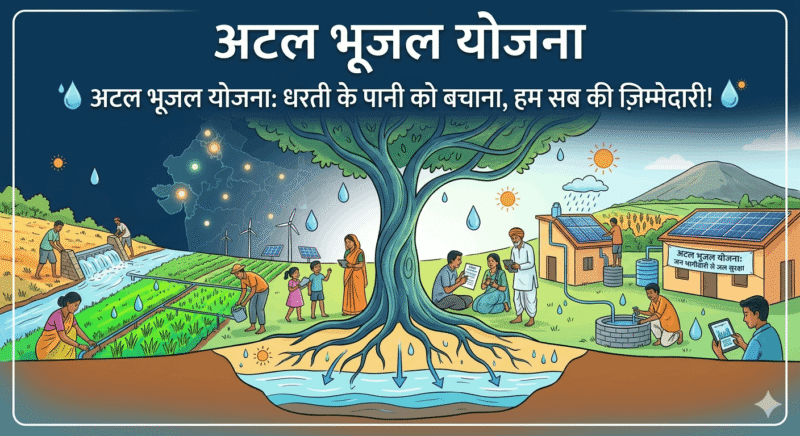
भारत दुनिया का सबसे बड़ा भूजल उपयोगकर्ता देश है — हर साल 241 अरब घन मीटर भूजल निकाला जाता है जो वैश्विक कुल का एक चौथाई है। भूजल भारत की कृषि सिंचाई में 62%, ग्रामीण जल आपूर्ति में 85% और शहरी जल आपूर्ति में 50% का योगदान देता है।
इस संकट से निपटने के लिए सरकार ने अटल भुजल योजना (Atal Bhujal Yojana / Atal Jal) launch की।
March 2026 तक लगभग 81,700 जल संरक्षण और recharge संरचनाएं created या restored की जा चुकी हैं। 8,203 वार्षिक water budgets participating Gram Panchayats में complete हुए हैं।
2023-24 और 2024-25 में 229 में से 180 blocks में भूजल स्तर में measurable improvement दर्ज की गई।
आज 27 मई 2026 को सरकार ने Atal Bhujal Yojana और National Water Mission की achievements को highlight किया — rural water security strengthen होने के प्रमाण के रूप में।
📊 अटल भुजल योजना 2026 — एक नज़र में
| विवरण | जानकारी |
|---|---|
| योजना का नाम | अटल भुजल योजना (Atal Bhujal Yojana) |
| दूसरा नाम | Atal Jal |
| Ministry | Ministry of Jal Shakti |
| Department | Dept of Water Resources, River Dev & Ganga Rejuvenation |
| Launch | 25 दिसंबर 2019 (अटल बिहारी वाजपेयी जयंती) |
| Completed | 15 October 2025 |
| Extended | March 2026 तक (pending activities) |
| Total Outlay | ₹6,000 करोड़ |
| World Bank funding | 50% |
| India Government | 50% |
| States | 7 (Gujarat, Haryana, Karnataka, MP, Maharashtra, Rajasthan, UP) |
| Gram Panchayats | 8,562 |
| Districts | 80 |
| Blocks | 229 |
| जल संरचनाएं (March 2026) | 81,700+ |
| Water Budgets complete | 8,203 |
| Improved blocks | 180 out of 229 |
| Efficient water use | 6,68,683 hectares |
| Digital Water Level Recorders | 6,271 |
| Total funds released | ₹3,861.68 करोड़ (March 2025) |
| Funds utilised | ₹3,418.20 करोड़ |
| SDG connection | SDG 6.4 और 6.5 |
| Official portal | ataljal.mowr.gov.in |
| अंतिम अद्यतन | 27 मई 2026 |
🎯 अटल भुजल योजना क्या है?
अटल भुजल योजना India का flagship community-led groundwater management programme है। यह Ministry of Jal Shakti, Government of India द्वारा December 2019 में launch किया गया। Scheme ने institutional reform की शुरुआत की और traditional supply-side solutions से हटकर participatory, data-driven और demand-focused groundwater governance की तरफ बढ़ा — Gram Panchayats को groundwater planning में empower करके।
नाम का महत्व
अटल भुजल = अटल बिहारी वाजपेयी + भुजल (Bhujal = Groundwater)
यह scheme 25 दिसंबर 2019 को पूर्व प्रधानमंत्री अटल बिहारी वाजपेयी की 95वीं जयंती पर launch हुई।
Atal Jal किन्हें अलग बनाता है?
पहले का approach (Supply-side):
- ❌ Canals, dams, pipelines बनाओ
- ❌ Government top-down decide करे
- ❌ Communities passive recipients
Atal Jal का approach (Demand-side):
- ✅ Water Budgeting — गाँव खुद plan करे
- ✅ Community leadership — Gram Panchayat central role
- ✅ Real-time monitoring — data-driven decisions
- ✅ Performance incentives — अच्छे काम पर ज़्यादा पैसा
💧 भारत का भूजल संकट — क्यों ज़रूरी थी यह योजना?
भूजल भारत की agriculture सिंचाई में 62%, rural water supply में 85% और urban water supply में 50% contribute करता है। India हर साल 241 billion cubic metres extract करता है — global total का एक चौथाई — जिससे कुछ states में भूजल extraction, recharge से ज़्यादा हो गया है।
7 Most Stressed States — Atal Jal में शामिल
Gujarat, Haryana, Karnataka, Madhya Pradesh, Maharashtra, Rajasthan और Uttar Pradesh — ये वो states हैं जहाँ भूजल संकट सबसे गहरा है।
Groundwater Crisis के Effects
- 🔴 किसानों की pump costs — पानी गहरा जाने पर बिजली खर्च बढ़ता है
- 🔴 Drinking water shortage — गाँवों में हैंडपंप सूखने लगे
- 🔴 Agriculture failure — insufficient irrigation
- 🔴 Water conflicts — गाँवों के बीच झगड़े
- 🔴 Climate change — irregular rainfall से recharge कम
🏘️ Water Budgeting — Atal Jal की सबसे खास बात
Atal Bhujal Yojana decentralised water governance के लिए Gram Panchayat level पर water budgeting को key tool के रूप में promote करती है।
Water Budget क्या होता है?
हर Gram Panchayat हर साल एक Water Budget बनाती है जिसमें:
| Item | Details |
|---|---|
| कितना पानी उपलब्ध है | Groundwater recharge estimate |
| कितना निकाला जा रहा है | Current extraction data |
| कहाँ use हो रहा है | Agriculture, drinking, industry |
| क्या बचाना है | Conservation targets |
| क्या बदलना है | Cropping pattern, irrigation method |
8,203 water budgets participating GPs में complete हो चुके हैं।
Water Budgeting से क्या बदला?
- ✅ गाँव को पता चला — “हम ज़रूरत से X गुना ज़्यादा पानी निकाल रहे हैं”
- ✅ Farmers ने water-intensive crops कम किए
- ✅ Drip irrigation adopt किया
- ✅ Rainwater harvesting बढ़ी
- ✅ Groundwater recharge improve हुई
🏗️ 81,700+ जल संरचनाएं — March 2026 तक
Scheme traditional water conservation systems की revival और strengthening करती है — जिसमें Gokatte, Bawdi, Johad, Tanka, Kalyani और Diggi structures शामिल हैं — local conditions के अनुसार।
March 2026 तक 81,700 water conservation और recharge structures created या restored किए गए।
Traditional Structures — क्या हैं ये?
| Structure | राज्य | उद्देश्य |
|---|---|---|
| Johad | Rajasthan/Haryana | Rainwater collection tank |
| Bawdi (Baoli) | Rajasthan/Gujarat | Step-well — ancient water storage |
| Tanka | Rajasthan | Underground rainwater cistern |
| Gokatte | Karnataka | Traditional pond |
| Kalyani | Karnataka | Temple tank — water storage |
| Diggi | Rajasthan | Small irrigation reservoir |
ये सदियों पुरानी structures — Atal Jal ने इन्हें revive किया।
📊 Funding Structure — World Bank Partnership
Total budget ₹6,000 करोड़ — जिसमें 50% World Bank और 50% India Government का share।
Two Components
Component 1: Institutional Strengthening and Capacity Building (30%)
- ₹1,800 करोड़ — States को capacity building के लिए
- Training, equipment, technology
- Digital Water Level Recorders install करना
Component 2: Performance-based Incentive Grants (70%)
- ₹4,200 करोड़ — State-wise performance पर based
- जो state ज़्यादा अच्छा काम करे, उसे ज़्यादा incentive
- 5 Key Indicators पर measurement
State-wise Fund Utilisation (March 2025 तक)
State-wise: Karnataka सबसे ज़्यादा utilisation ₹831.71 करोड़, फिर Haryana ₹620.48 करोड़ और Maharashtra ₹609.59 करोड़।
Total: ₹3,861.68 करोड़ released, ₹3,418.20 करोड़ utilised (March 2025 तक)।
📈 5 Performance Indicators — Incentive का आधार
States को incentive इन 5 indicators पर performance के आधार पर मिलता था:
| Indicator | Description |
|---|---|
| 1. Data dissemination | Groundwater data communities तक पहुँचाना |
| 2. Water Security Plans | GP-level water security plans तैयार करना |
| 3. Management Interventions | Existing schemes से convergence |
| 4. Demand-side Management | Water use efficiency बढ़ाना |
| 5. Groundwater Level Improvement | Actual measurable improvement |
जितनी बेहतर performance — उतना ज़्यादा incentive। यह “pay for results” model है।
🔬 Technology Component
6,271 Digital Water Level Recorders और 7,419 digital/analog water level indicators 7 States में install किए गए हैं।
Technology का उपयोग
- Real-time monitoring — भूजल स्तर हर दिन track
- Data dissemination — communities को information
- Hydrogeological mapping — exact ground conditions map
- AI-enabled pump controllers — (Haryana में implement)
- Mobile apps — field data collection
AI-Enabled Pump Controllers (Haryana)
Haryana ने Atal Jal के तहत AI-enabled pump controllers और rainwater harvesting initiatives implement किए — ₹184.24 करोड़ के incentive fund utilization plan के part के रूप में।
🌍 SDG Connection
Atal Bhujal Yojana ने SDG 6.4 (water-use efficiency) और SDG 6.5 (Integrated Water Resources Management) के तहत national commitments को advance किया।
| SDG | Target | Atal Jal का Contribution |
|---|---|---|
| SDG 6.4 | Water-use efficiency | Water budgeting से 40%+ efficiency gain |
| SDG 6.5 | IWRM by 2030 | GP-level participatory water governance |
🏆 Atal Bhujal Yojana की 2026 Achievements
229 में से 180 blocks में measurable improvement (2023-24 और 2024-25 assessments)।
81,700 water conservation और recharge structures created या restored (March 2026)।
8,203 annual water budgets participating GPs में complete।
6,68,683 hectares efficient water use के तहत (January 2026)।
Maharashtra की Success Story
Maharashtra में Atal Jal 1,442 villages, 1,133 Gram Panchayats, 73 watersheds, 13 districts को cover करती है। 5 लाख से अधिक ग्रामीणों को training दी गई। 11 out of 43 talukas में positive groundwater improvement।
Haryana की Extra Allocation
Haryana की exemplary performance के कारण ₹144.85 करोड़ की additional allocation मिली — total ₹615.37 करोड़ incentive funds।
🔗 VB-G RAM G और Atal Bhujal Yojana
VB-G RAM G Act 2025 (1 July 2026) के Schedule I में Category 1 — Water Security में 107 water-related works शामिल हैं।
Atal Jal का convergence VB-G RAM G के साथ:
- Recharge Pits (VB-G RAM G Work 53-55) → Atal Jal recharge targets
- Farm Ponds (Work 42) → Water budgeting goals
- Check Dams (Works 1-12) → Traditional structures
- Johad/Tanka revival → 81,700 structure target
दोनों schemes एक-दूसरे को complement करती हैं।
📞 आधिकारिक स्रोत
- Atal Jal Portal: ataljal.mowr.gov.in
- Ministry of Jal Shakti: jalshakti-dowr.gov.in
- CGWB: cgwb.gov.in (Central Ground Water Board)
- PIB: pib.gov.in
🔗 संबंधित योजनाएं
- VB-G RAM G 318 कार्य — Water Security category
- VB-G RAM G अधिनियम 2026
- PM Gati Shakti — Infrastructure
- Geotagging Geofencing — Technology in governance
- Yuktdhara Portal — GIS rural planning
अक्सर पूछे जाने वाले प्रश्न (FAQ)
अटल भुजल योजना क्या है?
अटल भुजल योजना (Atal Jal) India का flagship community-led groundwater management programme है। Ministry of Jal Shakti द्वारा launch यह scheme participatory, data-driven और demand-focused groundwater governance के लिए Gram Panchayats को empower करती है। यह 25 दिसंबर 2019 को अटल बिहारी वाजपेयी की 95वीं जयंती पर launch हुई — ₹6,000 करोड़ outlay के साथ।
Atal Bhujal Yojana में कौन से 7 राज्य शामिल हैं?
Gujarat, Haryana, Karnataka, Madhya Pradesh, Maharashtra, Rajasthan और Uttar Pradesh — ये वो 7 water-stressed states हैं जहाँ 8,562 Gram Panchayats, 80 districts और 229 blocks में scheme implement होती है।
Atal Jal की March 2026 तक क्या achievements हैं?
March 2026 तक: 81,700 water conservation और recharge structures created/restored, 8,203 water budgets complete। 180 out of 229 blocks में measurable groundwater improvement। 6,68,683 hectares efficient water use, 6,271 Digital Water Level Recorders install।
Water Budgeting क्या है और क्यों ज़रूरी है?
Water Budgeting Gram Panchayat level पर decentralised water governance का key tool है। हर GP हर साल एक water budget बनाती है — कितना पानी available है, कितना निकाला जा रहा है, कहाँ use हो रहा है, और कैसे conserve करना है। 8,203 water budgets complete हो चुके हैं।
Atal Bhujal Yojana में World Bank का क्या role है?
Atal Bhujal Yojana में 50% funding World Bank से और 50% India Government से आती है। World Bank की यह funding performance-linked है — States को incentive उनकी groundwater management achievements के आधार पर मिलता है।
Atal Jal किन traditional water structures को revive करती है?
Atal Jal Gokatte, Bawdi, Johad, Tanka, Kalyani और Diggi जैसी traditional water conservation systems को revive और strengthen करती है — local conditions के अनुसार। March 2026 तक 81,700 ऐसी structures created या restored हो चुकी हैं।
Atal Bhujal Yojana और SDG का क्या connection है?
Atal Bhujal Yojana ने SDG 6.4 (water-use efficiency) और SDG 6.5 (Integrated Water Resources Management) के तहत national commitments को advance किया।
Atal Jal UPSC के लिए क्यों important है?
Atal Jal UPSC Prelims और Mains दोनों के लिए: GS-3 — Water resources, environmental conservation, community participation। Key facts: Launch 25 Dec 2019, 7 states, 8,562 GPs, ₹6,000 crore, World Bank 50%, SDG 6.4/6.5, Water Budgeting, 81,700 structures, 180/229 blocks improved, performance-based incentives। मुख्य विशेषता: Demand-side management + community participation।
डिसक्लेमर
यह लेख Ministry of Jal Shakti, IANS और India Water Portal की Atal Bhujal Yojana की आधिकारिक जानकारी के आधार पर तैयार है। नवीनतम जानकारी के लिए ataljal.mowr.gov.in देखें।
स्रोत: Ministry of Jal Shakti | India Water Portal | IANS (27 May 2026) | PIB India | IBEF

लेखक: सरिता मिश्रा — सरिता “सरकारी योजना” की मुख्य लेखिका हैं। वे केंद्र और राज्य सरकार की योजनाओं पर शोध करके उन्हें आसान हिंदी में समझाती हैं, ताकि हर आम परिवार ज़रूरी जानकारी आसानी से समझ सके। हर लेख आधिकारिक स्रोतों (PIB, मंत्रालय की वेबसाइट और सरकारी पोर्टल) से जाँचने के बाद ही प्रकाशित किया जाता है।